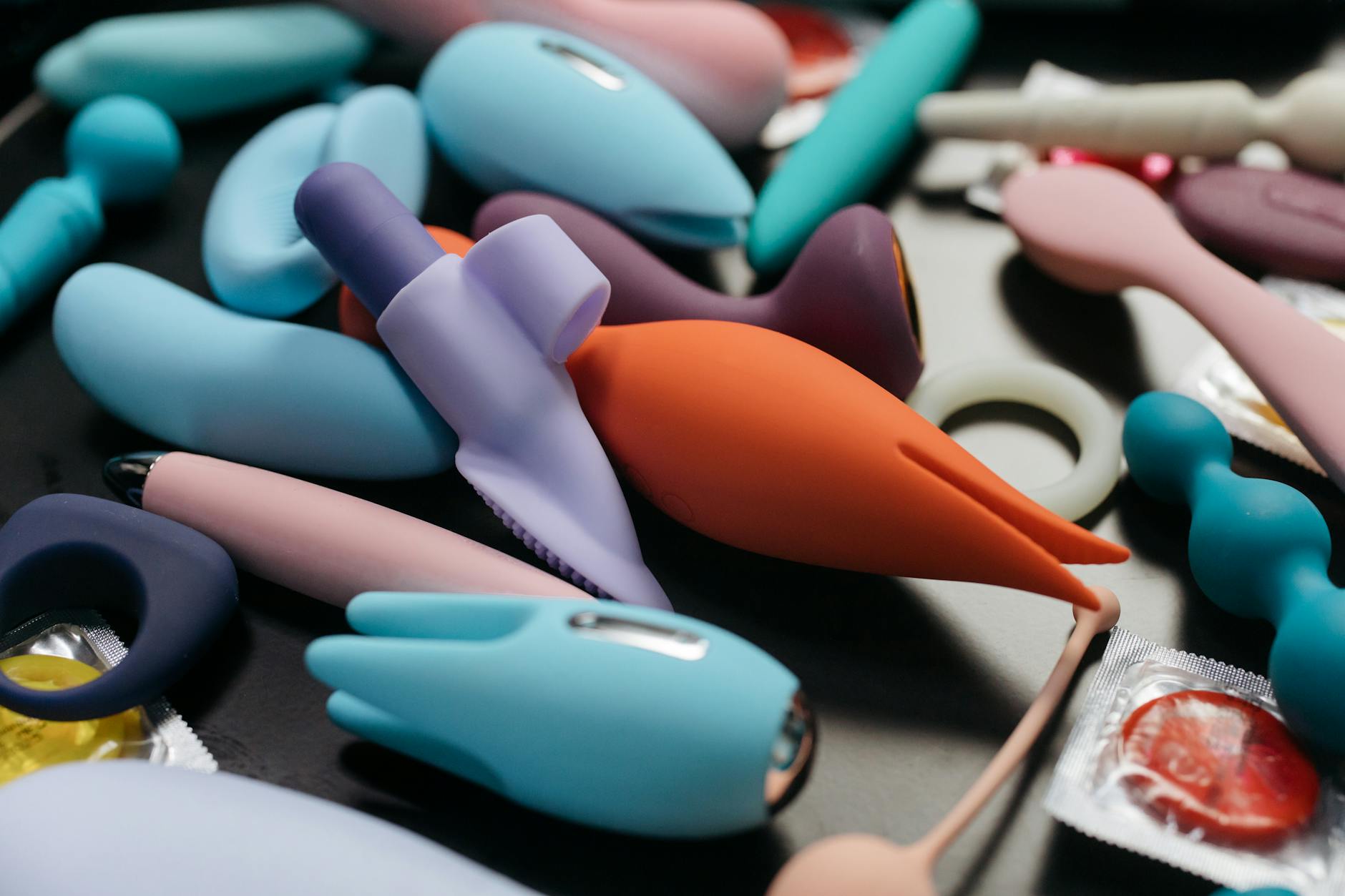
Let's start with what's actually happening
Your clitoris has a threshold. Too little sensation and nothing registers. Too much too fast and your whole nervous system slams the door shut. You're not broken. You're sensitive, which is different.
Here's the thing: people with low clitoral thresholds often assume they have low sensitivity. Backwards. You're actually picking up sensation acutely. Your body just needs it delivered in a particular way, at a particular pace. Most vibrators barrel in like a sledgehammer. Lemon clitoral vibrators, especially the suction-based design, let you modulate intensity in ways that meet your nervous system halfway.
Why standard vibrators backfire for you
Conventional vibrators use direct friction. Turn them on, press them against your clitoris, and you're dealing with continuous stimulation that either feels fine or feels like too much. There's almost no middle ground. For people with a low pleasure threshold, this is frustrating. You want sensation, but you want control.
Lemon vibrators work differently. The suction design creates a pulse of pressure and release rather than constant friction. This rhythm naturally matches how sensitive tissue prefers to be stimulated. You're not grinding against your clitoris for minutes on end. You're creating a pattern of engagement and recovery. That recovery phase is what lets your nervous system stay present instead of shutting down.
The calibration process that actually works
Forget starting at the highest setting and working down. That's backwards. Start at the absolute lowest setting and stay there for longer than feels necessary.
Here's the protocol I recommend to clients with low thresholds:
Session one: Familiarization. Use the lemon clitoral vibrator at setting one (the lowest pulse pattern) for 5 to 10 minutes without any expectation of orgasm. Your only job is to notice what setting one actually feels like. Not whether it feels good. Just what it feels like. Most people find this disorienting because they're used to vibrators that demand attention. Setting one is quiet. It's gentle. You might not think it's "working." It is.
Session two: Observation. Same setting, same duration, but this time notice whether you want to move the toy slightly, speed up subtle pelvic movements, or adjust angle. You're learning your own micro-preferences without pressure.
Session three: Progression. Stay at setting one for five minutes, then move to setting two for another five. Notice the difference. Does setting two feel like an escalation or a qualitative shift? Where's the sweet spot where sensation starts to feel pleasurable rather than just noticeable?
Sessions four onward: Expansion. Once you've found your baseline, you can explore. But here's the rule: never jump more than one setting level per session. Your threshold adapts slowly. Jump from setting two to setting four and you're back to overwhelming your system.
Positioning and angle matter more than you'd think
With lemon adult toys, the angle of contact changes everything for people with low thresholds. Direct head-on contact can feel too intense. Angled contact, slightly off-center, or even indirect contact (the vibration transmitting through surrounding tissue rather than hitting the clitoris directly) often feels better.
Try these positions if standard contact feels overwhelming:
Comma positioning: Angle the Lem so it's approaching from the side rather than straight on. Your clitoris gets the stimulation without the full force of direct contact.
Indirect contact: Hold it just above or slightly to the side of your clitoris so the vibration reaches you through the skin and connective tissue rather than through direct pressure.
Pubic mound contact: For some people, the sensation is more manageable when the vibrator is against the mound of tissue above the clitoris rather than the clitoris itself. You're getting the benefit of vibration while buffering the intensity.
Experiment with distance and angle before you adjust intensity. Sometimes changing position does the work of moving down a setting level.
Lubrication as a tool, not just a lubricant
If you have a low clitoral threshold, lubrication becomes a sensitivity modulator. Water-based lube creates a slight buffer between the toy and your clitoris. It reduces friction and changes how the vibration transmits through the tissue.
Apply lube generously if standard contact feels too intense. Reapply halfway through. You might find that lube transforms setting two from overwhelming to exactly right.
This is not about anything being wrong with your body. It's about using the tools available to match your actual needs.
What happens if you push past your threshold
If you stay in overstimulation territory, your body will either stop responding (the clitoris essentially goes numb as a protective measure) or you'll experience something that resembles discomfort or soreness after arousal ends. Neither of those is pleasure. Both are signals that you've pushed into the wrong zone.
The goal isn't to "train" your threshold higher. The goal is to find the precise zone where sensation registers as pleasure without triggering shutdown. That zone is stable. You're not broken. You're working within your actual sensitivity range.
The partner conversation, if relevant
If you're using lemon clitoral vibrators with a partner, this matters. Your partner might interpret your need for lower intensity as disinterest. It's not. It's the opposite. You're protecting your ability to stay aroused and present.
Here's what helps: name it directly. "I have a low sensitivity threshold. That means I need lower intensity, but I also experience it more acutely when it's calibrated right." This separates the conversation from performance or desire. It's neutral information about how your nervous system works.
Many partners are relieved to understand this because it removes guesswork from the equation. You're not being mysterious or difficult. You're being clear about logistics.
Timing and arousal state shift everything
Your clitoral threshold is not fixed across all times and all arousal states. Early in arousal, your threshold is lower. Your clitoris is less engorged, more sensitive to pressure. As arousal builds, your threshold often increases. The same setting that felt intense at minute two might feel perfect at minute eight.
This is normal. It's why pacing matters. Start low, build slowly, let your body adjust. Setting two might be too much when you first introduce the Lem. Setting two might be underwhelming 10 minutes later. This is your arousal system working, not a sign of inconsistency.
Payoff: once you understand this timing, you can actually use lemon vibrators more effectively because you're not fighting against your own physiology. You're working with it.
When to see someone
If your clitoral threshold is so low that even the gentlest touch at the lowest possible intensity creates pain or significant discomfort, that's worth checking with a gynecologist or pelvic health specialist. Conditions like vulvodynia or provoked vestibulodynia involve pain (not just sensitivity) and benefit from specific treatment. That's different from having a low pleasure threshold.
If sensation is present but muted across the board, and you've been working with lemon clitoral vibrators for several weeks without finding a workable zone, check in with a healthcare provider. Sometimes medication effects, hormonal shifts, or pelvic floor tension can lower your entire sensation range, and that's addressable.
But if you have sensation and you can find a setting and positioning that feels good, you're working with your actual wiring. Lean into it.
FAQ: Low clitoral threshold and lemon vibrators
Can I use a lemon vibrator if my clitoris feels numb most of the time?
Numbness is different from low threshold. A low threshold means sensation registers intensely. Numbness means sensation doesn't register at all. If your clitoris feels numb, that's worth exploring with a healthcare provider because it could signal nerve compression, medication effects, or circulatory issues. A lemon clitoral vibrator might help once you understand what's causing the numbness, but the numbness itself is the thing to address first.
Does my low threshold mean I can't have really intense pleasure?
Not at all. Your pleasure ceiling might be lower on the vibration intensity scale, but that doesn't mean the pleasure is shallow. Many people with low thresholds report incredibly acute, localized orgasms that feel more concentrated than broad. You're working with different parameters, not a deficit.
Should I be using a different lemon adult toy if standard lemon vibrators feel too intense?
The Lem is actually the most adjustable lemon clitoral vibrator for people with low thresholds because it has the most granular intensity settings and the suction mechanism naturally modulates intensity compared to direct-contact vibrators. If even setting one feels too much, check your positioning and try angled or indirect contact before switching toys.
How long does it take to expand my threshold if I work with a lemon vibrator regularly?
Your threshold doesn't expand. Your calibration point might shift slightly over time as your body acclimates, but you're not retraining yourself to tolerate more. You're learning precision. Some people find that after several months of regular use, they can comfortably reach setting three or four. Others stay at settings one and two. Both are completely fine. The goal isn't expansion. It's consistent, reliable pleasure at the level that works for you.
Can stress lower my clitoral threshold even more?
Yes. Stress tightens the pelvic floor and increases overall nervous system reactivity. During high-stress periods, your threshold might feel even lower than baseline. This is temporary. It's also why pacing and patience matter. During stressful seasons, you might stay at lower settings and that's adaptive, not regression.
Is low clitoral threshold the same as vaginismus or pelvic floor dysfunction?
No. Low threshold is about sensitivity and stimulation preference. Pelvic floor dysfunction and vaginismus involve involuntary muscle tension and often pain. You can have low threshold without pelvic floor issues, and you can have pelvic floor issues without low threshold. They're separate things, though they can co-occur. A pelvic floor physical therapist can help clarify which is which.
The actual outcome you're after
You're not trying to become someone with a high threshold. You're trying to find the specific calibration where sensation registers as pleasure reliably and repeatedly. That's achievable. Lemon clitoral vibrators give you the granularity to find it. Start low, stay patient, adjust angle before intensity, and notice what works. Your pleasure matters. And it doesn't require you to tolerate anything uncomfortable to find it.
For more on timing your sessions and building confidence with sensation, read about how to use lemon vibrators when arousal takes longer to build. If you're exploring these tools with a partner, check out how to use lemon vibrators when you have a new partner and want better communication.
Questions or want to explore what Nancy Lemon Shop products might work for you? Get in touch at /contact.