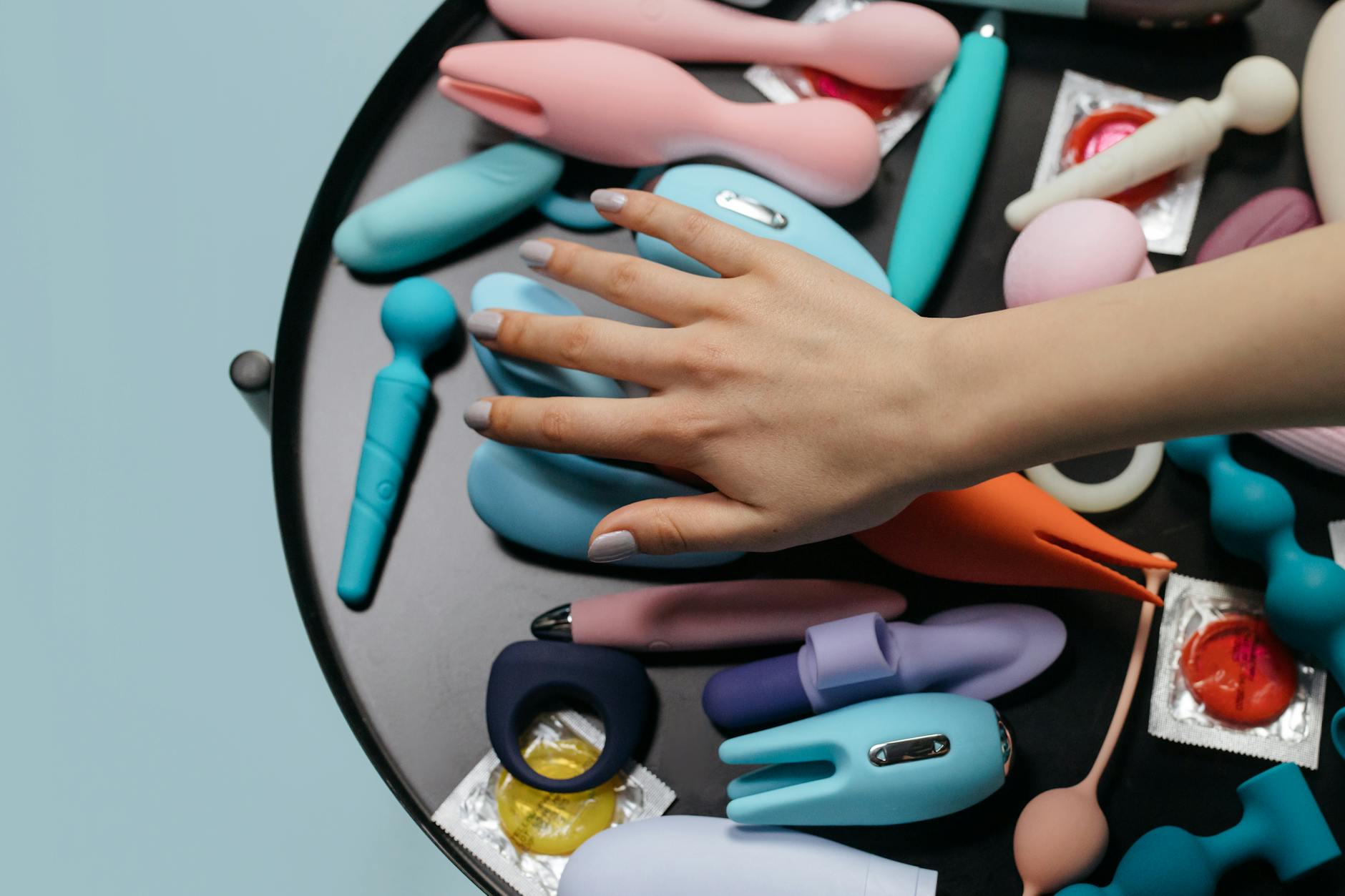
What anxiety actually does to pleasure
Let's be real. Anxiety doesn't just live in your head. It lives in your nervous system, and your nervous system controls arousal. When you're anxious, your body enters a protective state. Blood flow moves away from your genitals and toward your muscles. Your pelvic floor tightens. Your brain stops registering sensation the way it normally would. This isn't weakness or broken wiring. It's your nervous system doing exactly what it's supposed to do: keep you safe.
The problem is that safety mode and pleasure mode can't coexist. They're competing states. And if your nervous system has spent months or years in high alert, retraining it to accept pleasure again takes deliberate, patient work.
Here's what makes lemon vibrators different for people working through anxiety-based numbness. They provide consistent, predictable stimulation that your nervous system learns to expect. Over time, that predictability becomes permission.
Why predictability matters more than intensity
When anxiety has blocked your pleasure response, the instinct is usually to go harder or faster. That's actually the opposite of what helps. A strong vibration can feel threatening to an anxious nervous system because it's unpredictable in its force. Your body tenses against it rather than opening to it.
Lemon vibrators use suction technology instead of percussion vibration. Suction creates a steady, enclosing sensation that feels fundamentally different. It's more like sustained pressure than jarring pulses. For an anxious nervous system, this distinction is crucial. The steady, predictable suction pattern tells your vagus nerve that this is safe. Repeatable. Manageable.
I often recommend starting at pattern 1 or 2 on a lemon clitoral vibrator. Not because you can't handle higher intensities, but because your nervous system needs to relearn what sensation feels like without feeling attacked. Think of it like physical therapy for arousal.
Starting with sensation awareness, not orgasm
Here's where most people get the goal wrong when they're rebuilding pleasure after anxiety. They think the endpoint is orgasm. Actually, the endpoint is feeling anything at all. And then feeling it without panic.
I recommend a practice that takes the orgasm pressure completely off the table. Set 10 minutes. Use your lemon vibrator on the lowest setting, not with the goal of climax, but with the goal of noticing. Where do you feel sensation? Is it sharp or dull? Does it feel good, neutral, or uncomfortable? No sensation is wrong. Numbness is information. Discomfort is information.
This is called somatic tracking, and it's foundational work for rebuilding arousal after anxiety has shut it down. Your brain is learning that touch can be safe, and your genitals are learning that sensation doesn't mean danger.
Building tolerance gradually
There's a window between "too little stimulation to feel anything" and "so much stimulation it triggers my anxiety response." That window is usually smaller than you'd think when you're starting this work. The job is to gradually widen it.
With lemon adult toys, you do this by spending a few weeks at each pattern level before moving up. Spend five sessions at pattern 1. Notice what shifts. Then try pattern 2 for five sessions. Some people spend months moving through the pattern scale, and that's exactly right. There's no speed that's better.
You'll know you're ready to move up when the current pattern starts to feel almost boring. That's your nervous system saying it's metabolized this level of stimulation. It's safe now. You can increase.
The role of breathing during the session
Here's something that changes everything but almost no one thinks about it. When anxiety has blocked your pleasure response, your breathing gets shallow during arousal attempts. Shallow breathing keeps your nervous system in fight-or-flight. Deep breathing switches it to parasympathetic. Safety.
Before you use your lemon sucker or lemon clitoral vibrator, spend two minutes breathing deliberately. Four counts in, hold for four, six counts out. Lower, slower, deeper. That's not spiritual nonsense. That's activating the vagus nerve, which is the highway between your nervous system and your sexual response.
During the session, if you notice your breathing getting shallow or rapid, pause the vibrator. Breathe. Notice the shift in your body. Then restart at a lower pattern if you need to. This isn't failure. It's calibration.
Managing the anxiety spiral when it shows up
Some sessions, you'll start using your lem vibrator and you'll feel the old anxiety response kick in. Tightness. Panic. The urge to stop. This is normal, and it's not a reason to quit the practice.
When this happens, pause. Don't force through it. Forcing trains your nervous system that pleasure is dangerous. Instead, remove the vibrator, breathe, and ask yourself: am I in actual danger right now, or does my nervous system think I am? Usually it's the latter.
Then choose. You can stop for the day. You can try again at a lower pattern. You can try a different position that feels more grounded. There's no wrong choice. The goal is teaching your body that you get to decide, that you're in control, and that stopping is always an option.
Why a partner's presence changes the equation
If you have a partner, their presence during this rebuilding work either helps or hinders, depending on how they show up. If your partner is watching, waiting for results, or has opinions about your timeline, that's adding performance pressure. Performance pressure recreates the anxiety loop.
The best partner role during this phase is absence or radical non-judgment. Either they're not in the room, or they're in the room but completely neutral about what happens. No encouragement. No checking in. No "did it work this time?" Just space.
Some people find that having a partner nearby but engaged in something else (reading, working) is actually grounding. It says "I'm here, but this is your thing." Others need complete privacy to feel safe experimenting with sensation again. Both are right.
When to get professional support alongside this work
Using lemon vibrators thoughtfully can absolutely help rebuild pleasure after anxiety has blocked it. But vibrators aren't therapy. If your anxiety is severe, if you have a history of sexual trauma, or if you've had panic attacks during intimacy, working with a sex therapist or trauma-informed therapist is worth doing alongside this physical practice.
They can help you understand why your nervous system learned to protect itself this way. They can teach you grounding techniques specific to your anxiety profile. They can also rule out other things that might be contributing, like medication side effects or unprocessed relationship stress.
The vibrator is a tool. The nervous system retraining is the actual work. Both matter.
A permission slip you probably need
Rebuilding pleasure after anxiety teaches you that rushing yourself doesn't work. That force doesn't work. That the goal isn't to perform or to "fix" yourself. The goal is to listen to your body, move at its pace, and rebuild trust with yourself.
Using lemon clitoral vibrators in this way isn't indulgent. It's rehabilitation. Your pleasure matters, and the fact that anxiety has temporarily blocked it doesn't change that. Show up with patience. Show up with curiosity. Show up knowing that each session, even the ones that don't "work," is rewiring your nervous system toward safety and sensation.
That's how pleasure comes back. Slowly, predictably, and in your own time.
People also ask
How long does it take to rebuild pleasure response after anxiety?
It varies, but most people notice a shift in 4 to 8 weeks of consistent practice. Some see changes in 2 weeks. Others take 3 to 4 months. The timeline depends on how long anxiety was blocking arousal, whether you're also in therapy, stress levels, sleep, and whether you're trying to rush the process. The rule: if you're checking in with yourself weekly and noticing even small shifts in sensation or comfort, you're on track. Plateaus are normal and don't mean you're failing.
Can I use my lemon vibrator if anxiety makes me feel physical panic?
Yes, but with modifications. Start at the absolute lowest pattern and set a time limit of 5 minutes instead of 10. Have an exit strategy (you'll remove the vibrator the moment you feel panic rising). Some people find that using the vibrator fully clothed first, through underwear, creates enough distance that it doesn't trigger the nervous system. You're building tolerance gradually. If you're having panic attacks during these attempts, that's the sign to work with a therapist first before expanding this practice solo.
Should I tell my partner I'm using lemon adult toys for anxiety management?
That depends on your relationship and what you need. If you have a partner you trust, and if telling them helps you feel grounded and supported, yes. If telling them would add pressure or judgment, or if this is your private practice space, it's completely okay to keep it to yourself. This work is about rebuilding your relationship with your own body first. Your partner doesn't need to be part of every step.
What if I can't feel anything even on the highest patterns?
That's still information, not failure. Some people have anxiety so deeply wired into their arousal response that they need more than a vibrator alone. Medication changes, therapy, or medical issues like hormonal imbalance can also cause numbness. A conversation with your doctor or sex therapist is worth having. In the meantime, keep the somatic tracking practice going. Numbness sometimes shifts just from consistent, pressure-free exposure to sensation.
Can I use lemon vibrators with my partner while managing anxiety?
Yes, with intentionality. Start by using your lemon clitoral vibrator solo until you feel comfortable and grounded at a few patterns. Then, if you want to involve your partner, set boundaries first. Tell them what patterns you're comfortable with, what you need them not to do (no commentary, no pressure, no changing patterns without asking). Some people find that their partner using the vibrator on them feels too vulnerable early on. Others find it reassuring. Go at your pace, not theirs.
Does anxiety medicine change how lemon vibrators feel?
Some antidepressants and anti-anxiety medications can numb sensation or make orgasm harder. That's real and worth discussing with your prescriber. Some people find that the steady, predictable suction of a lemon clitoral vibrator is actually more accessible than other stimulation when they're on these medications, because it requires less neurological "work" to feel. If you notice a change after starting medication, that's the time to talk to both your prescriber and potentially a sex therapist about adjusting either the medication timing or your pleasure practice.
A note on reconnection
Anxiety is a powerful teacher, even though it teaches the wrong lesson. It teaches your nervous system that pleasure is dangerous. Rebuilding after that takes gentle, consistent counterevidence. A lemon vibrator, used with patience and self-compassion, is that evidence. Your body learns that sensation is safe again. That you're in control. That pleasure, quiet and steady, is yours to have.
If you're working through this, you're not broken. You're doing the slow, necessary work of rebuilding trust with yourself. That matters. And you deserve support as you do it. If you have questions about how to approach this work or want to talk through your specific situation, reach out to our team. We're here.