The gap that nobody names
Let's be real. One of you is ready to go. The other is scrolling their phone.
This isn't a metaphor. Arousal mismatch is the friction point that shows up in nearly every long-term relationship at some stage. It's not about attraction or love. It's about timing, biology, stress, and the fact that two bodies don't sync up on a schedule.
The problem is that we rarely have honest language for it. So instead, one partner feels rejected ("I'm always the one initiating") and the other feels pressured ("Why does it always have to be sex?"). Both are true. Both hurt. And both can be reframed entirely with the right tools and communication.
Here's what lemon vibrators actually solve when arousal feels one-sided.
Why arousal mismatch happens in the first place
First, some biology. Arousal is not a single speed dial. It's influenced by dozens of factors: cortisol levels, menstrual cycle phase, medication, sleep, stress, how the day went, whether your partner remembered to load the dishwasher.
Women typically take longer to reach arousal than men. This isn't opinion. It's measurable in blood flow, lubrication, and neural activation. Depending on cycle phase, the gap can be 15 minutes or 45 minutes. That's not a deficiency. It's just how the body works.
Add in real life. One partner works a high-stress job. The other manages the household and kids. By evening, one person's tank is empty while the other person finally has bandwidth to feel sexual. This desynchronization is not a sign the relationship is broken. It's a sign you need a different strategy.
The conversation nobody has before the argument
Most couples wait until they're frustrated to talk about arousal mismatch. Then the conversation becomes about blame. "You never want sex" versus "You're always pressuring me." Both people defend. Nothing changes.
Here's the version that works. Have this talk outside the bedroom, when nobody's activated.
"I've noticed our arousal timelines don't always match. I'm not saying that's bad. I'm saying it's real. Can we talk about what that's like for you?"
The person who's usually faster might say: "I feel like if I don't initiate, nothing happens. That's lonely."
The person who's usually slower might say: "I need more time to transition. My brain is still in work mode."
Neither of these is a rejection of the other person. They're constraints. And constraints have solutions.
Where lemon vibrators change the equation
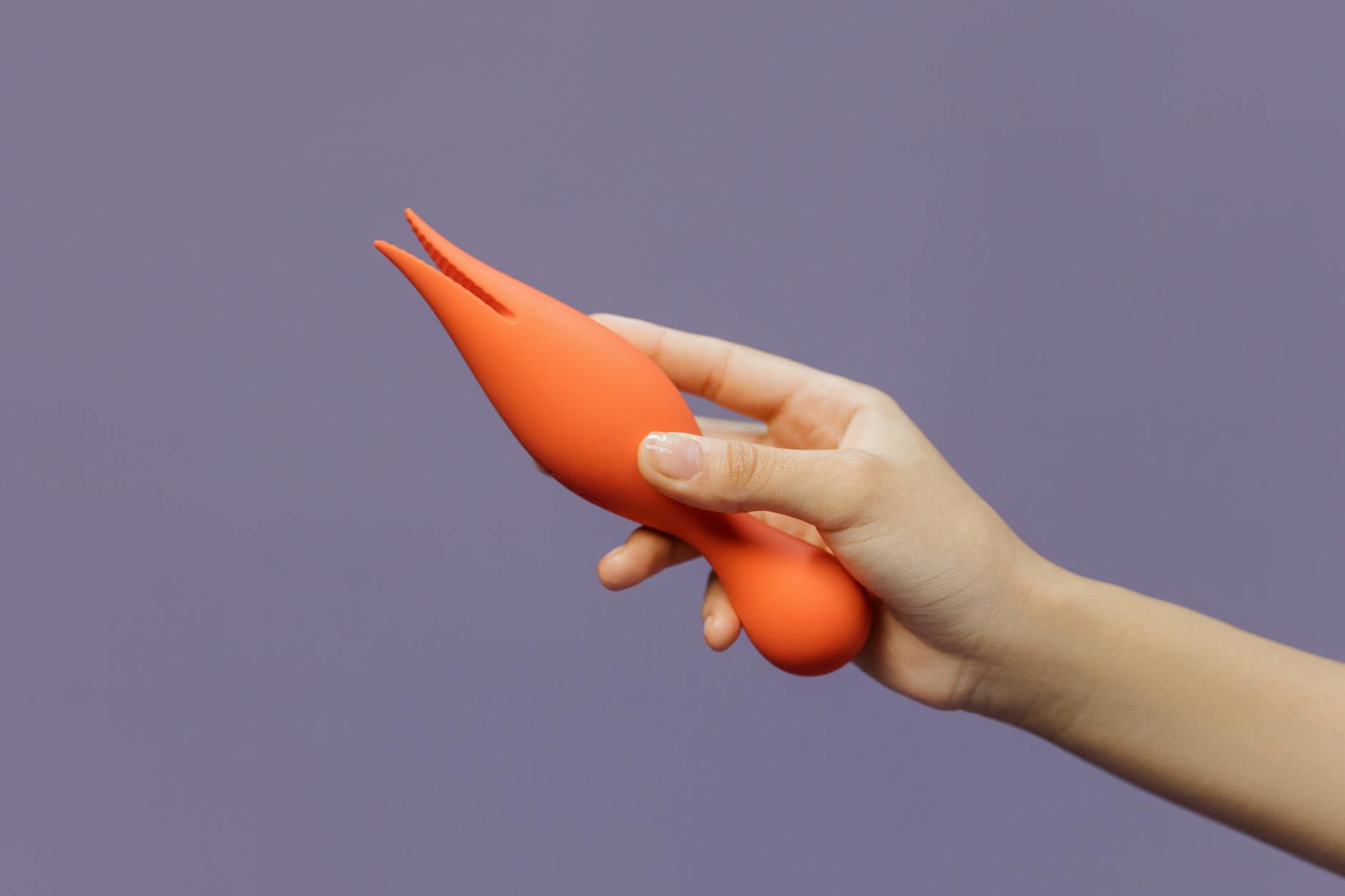
A lemon clitoral vibrator does one specific thing better than manual stimulation. It sustains consistent, targeted sensation without fatigue. This matters hugely when you have arousal timing mismatch.
Scenario one. You're the faster-aroused partner. Your person needs twenty minutes to warm up. Without a tool, those twenty minutes are you waiting, touching, hoping they get there. With a lemon vibrator (or similar suction-based clitoral toy), you're generating sensation for yourself while they transition into arousal. You're not waiting. You're not pressuring. You're just... there, enjoying your own body. That alone shifts the dynamic from "please want me" to "I'm here, come join."
Scenario two. You're the slower-aroused partner. Your person initiates. Instead of feeling pressure to catch up (which actually slows arousal), you can use a lemon vibrator at your own pace while your partner is engaged in foreplay with you. You're not racing to match their timeline. You're syncing at your own speed. The pressure dissolves.
Scenario three. The mismatch isn't speed. It's frequency. One partner wants sex twice a week. The other wants twice a month. A lemon clitoral vibrator lets the higher-desire partner have satisfying solo sessions without resentment building. This sounds simple but it's radical. It separates "I want partnered sex" from "I want to feel pleasure." They're not the same thing. And when you can meet one need solo, the other need stops feeling like an obligation.
Three structural shifts that actually work
First. Separate initiation from obligation. Your faster-aroused partner can initiate ("I'm feeling like it") without expecting immediate sex. They can invite you to be present while they use a lemon vibrator. Presence is not performance. You can watch, touch, talk. You're connecting without having to be ready right now. This removes the sting of rejection because there's no rejection happening. You're both getting what you need.
Second. Give yourself permission to have different arousal timelines in the same encounter. One of you gets there in five minutes. The other in twenty. That's not failure. Use those twenty minutes intentionally. One partner might use a lemon clitoral vibrator while the other does foreplay, or you both might use them on yourself while you're touching each other. The key is mutual presence and intent.
Third. Name frequency separately from quality. If you're the higher-desire partner, some of your sexual satisfaction might come from solo sessions with your lemon vibrator. This isn't cheating. It's not a sign the relationship is failing. It's actually the kindest thing you can do for a partner with lower baseline desire. You're not constantly asking them to want what they don't want right now.
The technical adjustments that make this work
If you're using a lemon vibrator with a partner, a few practical things matter.
First, lubrication. If your partner is slower to arouse, their body might not produce as much natural lubrication. A water-based lube isn't just comfort. It reduces friction and makes sensation feel more diffuse, less intense. This actually helps slower-aroused partners because it feels less overwhelming. Start with lube, even if you don't think you need it yet.
Second, communication about intensity. A lemon vibrator has multiple patterns and power levels. Start lower than you think. The anticipation of "this might get stronger" actually builds arousal better than jumping straight to maximum power. Let your partner control the intensity as they warm up.
Third, the positioning that works. When you're using a lemon vibrator with a partner present, you're usually reclined or propped up slightly. This lets your partner touch other parts of your body (your breasts, your thighs, your hair) while you're focused on clitoral pleasure. That combination of sensation is different from solo play and often feels more emotionally intimate.
When the mismatch is about mental load, not just biology
Here's the harder pattern. Often the "slower" partner isn't actually slow. They're exhausted. They're managing mental load that the faster-aroused partner isn't carrying.
This is where how to use lemon vibrators when you're recovering from the mental load of caregiving comes into the picture. Sometimes what feels like a desire mismatch is actually a labor distribution issue wearing a sexual disguise.
If that's your dynamic, the vibrator doesn't fix the underlying problem. But it does buy you time and pleasure while you're actually addressing the real thing.
The communication script that changes the frame
Here's what you might actually say.
"I've been thinking about how our arousal works differently. I don't think that means anything is wrong. I think it means we should try something. I want to use a lemon vibrator with you when we're intimate. Not instead of touch. Alongside it. The idea is that we can both feel pleasure without either of us waiting for the other to catch up. Does that sound like something you'd want to try?"
Notice what's absent. No blame. No pressure. No "you never" or "I always." Just a proposal.
Most partners respond to this. Not all, but most. Because you're not asking them to want something they don't. You're offering a structure where both of you can want different things at different paces and both feel satisfied.
What changes when you name the pattern
Once you've used a lemon vibrator together as a tool for desire mismatch, something shifts emotionally. You've created a container where "I want different things than you right now" isn't a relationship problem. It's just information. And information you can work with.
Many couples find that once the pressure drops, the slower partner's desire actually increases. Not because they suddenly want more sex. But because they're not defending against constant initiation. They have space to discover what they actually want.
And the faster-aroused partner stops feeling rejected because they're not waiting. They're not hoping. They're present with their own pleasure, and their partner is present with them.
That's not a compromise. That's a win for both people.
FAQ
Can using a lemon vibrator together actually improve desire mismatch?
Yes, but only if it's part of a larger conversation about arousal timing. The vibrator is a tool that makes it easier to have different arousal speeds without one person feeling rejected. But the emotional work is the conversation. You have to name what's actually happening and agree to approach it differently.
What if my partner feels threatened by the idea of me using a vibrator during sex?
That's real and not unusual. The frame that often helps is: "This isn't about you not being enough. It's about me being able to feel pleasure on my timeline, which actually lets me be more present with you." If they're still uncomfortable, that's worth exploring separately. Sometimes it's about insecurity. Sometimes it's about different beliefs about sexuality. Either way, a conversation is better than secretly resentment building.
Is it normal to have different arousal speeds in a long-term relationship?
Completely normal. It's so normal that it's one of the top reasons couples report sexual dissatisfaction. The difference is that some couples have a framework to handle it and others don't. Having a framework changes everything.
How long does it usually take for a partner to warm up if they're the slower-aroused one?
It varies wildly depending on stress, cycle phase, sleep, and a dozen other factors. But typically 15-45 minutes for most women. That doesn't mean you have to wait passively. It means you have 15-45 minutes to create conditions that help them transition from their day into arousal. That might be a lemon vibrator. It might be a bath. It might be them getting alone time first. Different things work for different people.
Can we use a lemon clitoral vibrator if we haven't talked about arousal mismatch yet?
Technically yes, but it works better if you have the conversation first. Using a tool without naming what you're trying to solve can feel random or awkward. But if you want to introduce it gently, "I found this toy and I'd like to try it with you" is a fine starting point. Then let the conversation unfold naturally.
What if we try this and it doesn't help?
Then there's a different problem underneath. Sometimes desire mismatch is actually about resentment from something else. Sometimes it's about depression or medical issues. Sometimes it's about the relationship not being right. The vibrator is never a band-aid for those. But for pure timing and arousal speed differences, this approach works in most cases.
Next steps
If arousal mismatch is your friction point, start with the conversation before you buy the tool. Know what you're trying to solve. Be specific about what feels off. Then introduce a lemon vibrator as a structure that serves both of you, not as a fix for what's "wrong" with your partner.
Your desire can sync on different timelines and still be aligned. That's not compromise. That's just respect. If you want to talk through your specific situation, reach out. That's what I'm here for.